

How often do you look forward to a nice cold shower? It is almost as relaxing as soaking in an ice bath, wouldn’t you say? We didn’t think so! Enjoying a cold shower is pretty much akin to a relaxing root canal. The large majority of people prefer their bathing water to be hot, and for good reason!
Our water heaters have become as much a part of our lives as electricity and indoor lights. It is easy to take water heaters for granted-until they stop working that is. Also, many people are not familiar with their basic bathroom plumbing, or their water heater set up.
Have no fear, however. We have your basics, and questions, answered below. It is important to have a basic understanding of how these things work so you can be prepared for all situations!
Bathroom Plumbing at a Glance
 Your bathroom plumbing, while can be tricky at times, is essentially pretty straight forward. Your water heater is a part of the plumbing, and is what allows hot water to flow from your faucets.
Generally speaking, your water heater is going to be located in your basement (or in a water closet if your homes don’t have a basement). Something to note; electric and gas water heaters operate in more or less the same way.
Three important features of your water heater are the pipes, dip tube, and tank (there are tankless water heaters, but they are not as common nor as energy efficient). Your water heater tank is normally going to be a tall cylinder container. The dip tube is what deposits the cold water into the tank.
The dip tube runs nearly to the bottom of the tank so the cold water will be closest to the heating device. Once the cold water is heated, it rises to the top of the tank where it is pushed through the pipes and comes out of your faucet.
Water Heater for a Mobile Home
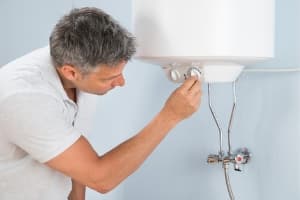 Regardless of the size of your home, there is a water heater available for your comfort. Mobile home water heaters are essentially the same as a full size, but can have a few differences.
One of the main differences is mobile homes normally do not have a basement, so the water heater will be housed in a water closet.
The water closet will most likely be near your furnace, or could possibly be in the bedroom closet or behind a hidden panel. A few other things that may be different are the placement of the hot and cold water outlets, and a mobile home water heater comes equipped with a strap kit.
Avoid Self Installations
 In every homeowners’ life comes a time when a new water heater may be needed. In our tough economic climate, you may think self-installation with a Home Depot water heater is your best bet.
Unfortunately, this may cause you a lot more money and headaches in the long run. Home Depot is hands down one of the most popular home improvement stores around.
We know! We love them too! Nevertheless, it is important that you are as safe as possible when installing a new water heater. Handled incorrectly, your water heater can cause gas leaks, fires, explosions, and floods.
For safety reasons alone, it’s better to stick with a professional for this one! Besides the safety concerns, water heaters also need to be inspected for safety. You will need a licensed professional to do this; plus save you the headache of pulling a permit.
Side Step the Embarrassing Moments
Now that you know the basics of your bathroom plumbing and water heater, we are sure you will be able to avoid some missteps. However, we do love to hear stories about those little missteps so let us know below!
If you do find yourself at the tail-end of one of these stories in the future, please reach out to us immediately at 423-915-9260! Marc Francis Plumbing has team members standing by to answer all of your questions!
From all of us at Marc Francis Plumbing, have a safe and happy Spring season!